Overview
My dissertation develops the Immersive Material Culture Framework, an approach to equitable interpretation and shared stewardship of African material culture. Through an XR exhibition, community interpretation sessions in Liberia, and collaborative digital heritage work in Nigeria, it examines how 3D and immersive technologies can strengthen community authority, reciprocal relationships, and participatory curation.
Across these settings, digital surrogates become a means of reconnecting dispersed collections with the people, knowledge, and relationships that give them meaning. The research connects immersive experience with responsibilities for access, attribution, circulation, and reuse.
The Immersive Material Culture Framework
Three guiding concepts connect the dissertation’s research methods and case studies.
Affective Curation
Foregrounding the emotional, spiritual, sensory, and embodied dimensions of heritage. Immersive encounters create opportunities for intimacy, wonder, and attention to the meanings people hold in relation to objects.
Interpretive Agency
Centering source communities and cultural knowledge holders as authorities in defining objects and their meanings. Community accounts contribute names, uses, memories, ritual limits, and social histories to collections knowledge.
Material Culture Diplomacy
Activating collections and digital surrogates to cultivate trust, institutional capacity, reciprocal exchange, and shared stewardship. Digital heritage becomes a space for sustained relationships across communities and institutions.
Three case studies
Augmented Curiosities
An extended-reality exhibition at Northwestern University invited visitors to manipulate digital surrogates and encounter interpretations from the African Studies community. The exhibition explores how virtual play and embodied attention can support affective curation.
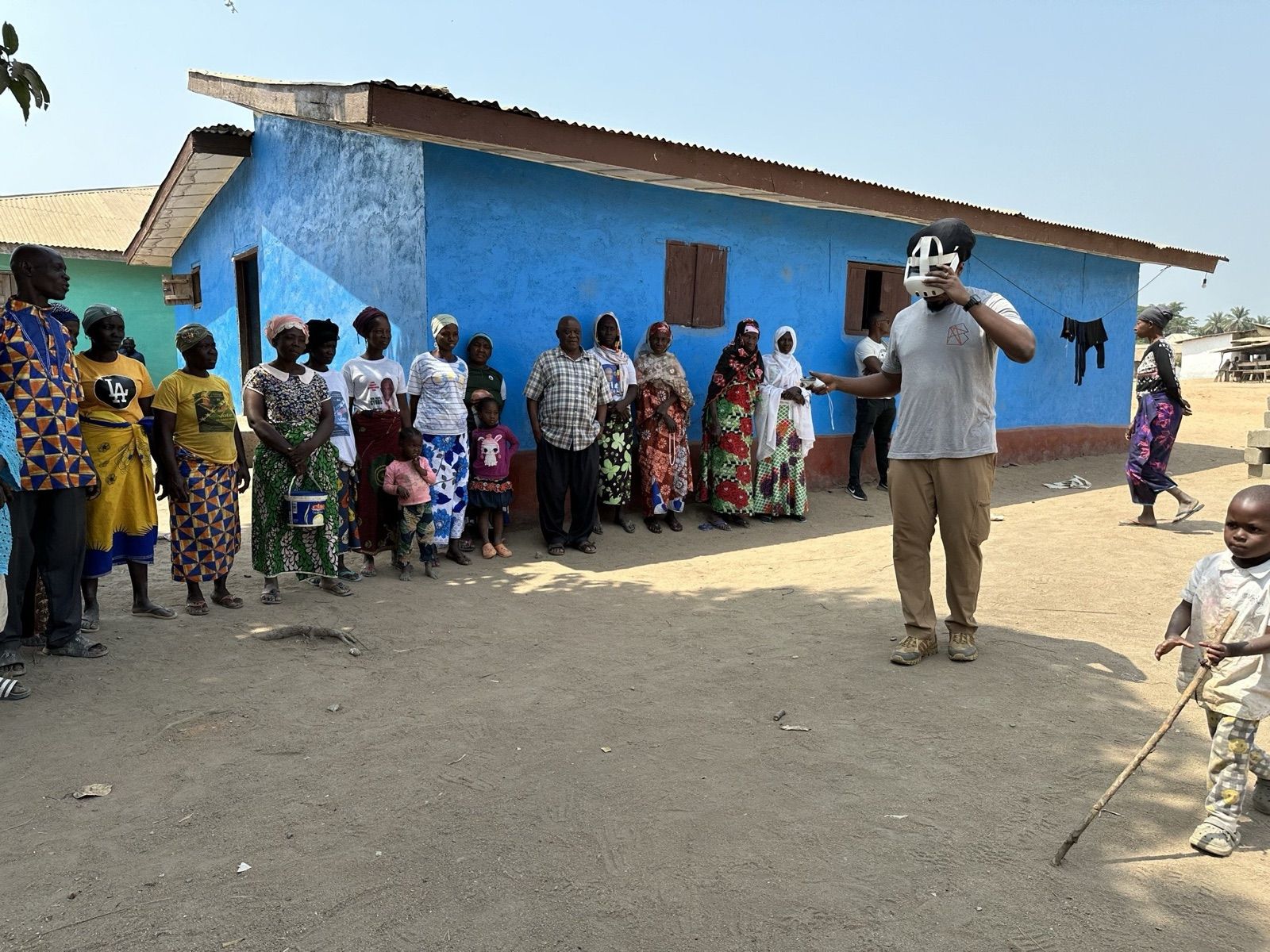
Community interpretation in Liberia
Thirteen Liberian objects held across six U.S. institutions informed regional VR environments used in forty-one interpretation sessions. Liberian elders, town chiefs, and community historians contributed knowledge that expands how dispersed collections can be understood and stewarded.
Explore VR Community Interpretations
Collaborative digital stewardship in Nigeria
The Material History Lab 3D Database, collaboration with the University of Ibadan, practitioner-led interpretation in Ẹdẹ, and a cross-border user study examine remote access, teaching, cultural interpretation, and capacity building.
Published abstract
This dissertation examines how 3D and immersive technologies can support equitable interpretation and stewardship of African material culture in collecting institutions. It addresses colonial collecting systems that separated African objects from source communities and centralized interpretive authority in Western institutions. I develop the Immersive Material Culture Framework, a restorative approach combining photogrammetry, 3D scanning, augmented reality, virtual reality, and web platforms with community-engaged research. The framework integrates three theoretical concepts: Affective Curation foregrounds the emotional, spiritual, sensory, and embodied dimensions of heritage; Interpretive Agency centers source communities and cultural knowledge holders as authorities in defining objects and their meanings; and Material Culture Diplomacy activates collections and digital surrogates to cultivate trust, institutional capacity, reciprocal exchange, and shared stewardship. Three case studies demonstrate the methodological application of these concepts. Chapter 2 examines Augmented Curiosities: Virtual Play in African Pasts and Futures, an extended-reality exhibition that enabled visitors to manipulate digital surrogates and encounter interpretations from Northwestern’s African Studies community, fostering intimacy, wonder, and embodied attention. Chapter 3 presents a VR methodology developed from thirteen Liberian objects held across six U.S. institutions. Regional VR environments supported forty-one interpretation sessions with Liberian elders, town chiefs, and community historians, whose accounts contributed names, uses, memories, ritual limits, and social histories frequently absent from museum records. Chapter 4 examines the Material History Lab 3D Database, collaboration with the University of Ibadan, practitioner-led interpretation in Ẹdẹ, Nigeria, and a cross-border user study demonstrating remote access, teaching, cultural interpretation, capacity building, and collaborative digital stewardship.
Across these cases, the dissertation argues that immersive technologies become ethically meaningful when research designs redistribute interpretive authority, sustain reciprocal relationships, and connect digital access with community governance. It treats 3D models, metadata, oral histories, and immersive interfaces as heritage infrastructure carrying responsibilities for access, attribution, circulation, and reuse. The Immersive Material Culture Framework strengthens restitution and repatriation efforts by equipping practitioners to preserve interpretive presence, reconnect source communities with dispersed collections, and sustain shared research before, during, and after return. It offers a model for participatory digital curation and equitable knowledge production concerning collections of African art, artifacts, and material heritage.